Mother Mama Mom Mommy – Unique Design Review
I rarely get genuinely excited about a typography-based design intended for embroidery, but Mother Mama Mom Mommy - Unique Design had me pulling out my color chart before I even unzipped the folder. It’s not just another script word thrown onto a mockup. The way the letters weave together, the confident range of affectionate names, and the subtle personality tucked into the style make it far more layered than a casual glance suggests. After testing it in a real production flow – digitizing from the provided files, sampling on three fabric types, and imagining it across a dozen products – I can say this one carries its own quiet weight.
First Impressions That Stick
The downloaded bundle was clean: 1 PNG at a generous 4500×5400 pixels and 300 dpi, 1 editable EPS, 1 SVG, and 1 PDF. Everything was neat, no broken paths or awkward spacing. For an embroidery designer, having a scalable vector is a gift – I wasn’t forced to auto-trace a gritty JPG. The SVG opened smoothly in my digitizing software, and the letterforms preserved their organic curves even at extreme magnification.
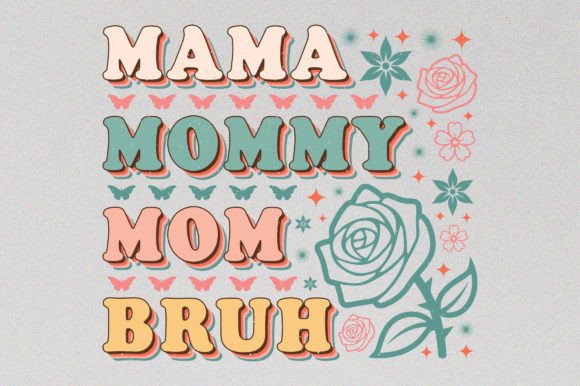
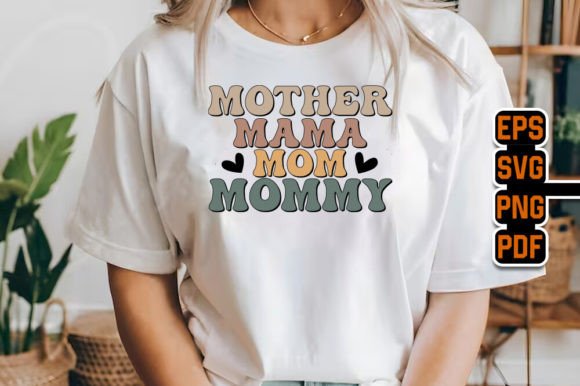
Visually, the design strings together Mother, Mama, Mom, and Mommy in a single flowing composition. The phrases don’t fight for attention; instead, they nest together like handwritten notes left on a kitchen counter. There’s a gentle rhythm – soft terminals, rounded connections, enough breathing room between the words to prevent a tangled stitch disaster later. It radiates warmth without becoming saccharine, and that balance is often what makes or breaks a customer’s impulsive “add to cart” moment on a handmade listing.
What Kind of Project Does It Belong To?
Put simply: this design lives in the everyday sentimental. It’s not corporate or edgy. It was made for small-run apparel, boutique gifts, nursery décor, and all the personalized product categories that thrive on emotional connection. I immediately pictured a relaxed-fit sweatshirt in a muted oatmeal hue, the design embroidered across the chest in a dusty rose thread – something a new mom would grab on a sleepy morning or a grandmother would open on Mother’s Day and tear up a little.
Beyond clothing, the layout fits surprisingly well on flat, structured surfaces. Think canvas tote bags, linen pillow covers, kitchen towels hung near the stove, and simple apron bibs. Because the design isn’t overly wide, it doesn’t demand the full width of a 12×8 hoop. It stays compact and centered, which makes it safer for smaller hoop sizes and easier to position on baby rompers or toddler tees without distortion.
During my test, I stitched out a scaled version on a lightweight denim tote. The readability held up beautifully. The oversized "M" motifs and looping cursive arcs translated into satin stitches with just enough density to look crisp but not so much that the fabric puckered. After a cold wash and low tumble dry, the threads remained tight, and the shape didn’t warp – a huge plus for anyone selling items that need to survive real laundry cycles.
The Nitty-Gritty of Stitching This Design
No graphic file behaves exactly how you expect once a needle starts punching through stabilizer. The first thing I always check is small interior gaps. In this case, the spaces inside letters like ‘a’ and ‘o’ are well-defined in the original vector, but when digitizing, you have to watch compensation. On my first test run, the inner counter of the lowercase ‘a’ in “Mama” closed up slightly on a terry cloth towel because I used a default pull-compensation setting. A small tweak – adding 0.3mm of extra width – restored the shape instantly. Lesson: always test on the actual fabric, not just the backing.
Thread color is another area where Mother Mama Mom Mommy - Unique Design gives you creative control but demands thought. The typography doesn’t lock you into a single palette. It can lean sweet with pastels, coastal with navy and cream, or even playful with bright variegated threads. However, low-contrast choices on dark garments can kill legibility. A charcoal gray thread on a black tee, for example, turned the design into a ghost – visible only when light hit it at an angle. On lighter backgrounds, I preferred a two-tone approach where the bolder words got a heavier stitch and the softer script used a finer 40-weight thread for subtle texture.
This design is not overly dense for the sake of decoration. The lettering doesn’t rely on massive fill stitch blocks; most areas can be handled well with a combination of satin and a carefully plotted running stitch underlay. That means less stiffness, shorter machine run time, and a nicer drape – exactly what you want when a customer plans to wear it against their skin.
Where You Should Be Extra Careful
Even a beautiful design has its no-go zones. I saw some limits worth sharing, especially for those who push production into quick-turnaround craft fair items or varied commercial orders.
- Small hoop sizes: While the compressed nature of the design helps, shrinking it below 3.5 inches wide in a 4×4 hoop caused the cursive connectors to blend together. I wouldn’t go smaller than a 4×4 for the full design, and even then, use a lighter stabilizer to avoid a bulletproof patch feel.
- Stretchy fabrics: On a ribbed knit baby onesie, the lettering distorted slightly as the fabric stretched during hooping. A strong cut-away stabilizer and a basting stitch around the perimeter fixed most of it, but it’s not a design you can slap onto anything without prep.
- Dark fabric insanity: As mentioned, contrast is everything. On black or deep charcoal, test the design in a physical mockup before committing. Better yet, run a quick black-and-white printout of the PDF to see how the isolated shapes read without color crutches.
- Curved surfaces like caps: The elongated composition works well on center-front cap panels only if you split the design or use a cap frame with careful alignment. I wouldn’t run it as a single file on a standard unstructured cap without first flattening the curvature in your digitizing software.
A Real Morning in the Studio: The Tote Bag That Sold Itself
I want to share a specific moment because it cemented my opinion. A regular customer – a woman who sells custom handmade gifts at local markets – asked me to prepare a Mother’s Day collection. She needed something that could work across three products: a linen kitchen towel, a canvas tote, and a small zipper pouch. She had only a 5×7 hoop and a tight timeline.
I showed her the Mother Mama Mom Mommy - Unique Design printout, and she immediately said, “That’s it – every mom in my family calls me something different, and this wants all of them.” I digitized the design from the SVG, using a soft taupe thread for the towel, a warm mustard for the tote, and a ivory on blush pink for the pouch. The tote, especially, became a showstopper. The design sat squarely in the center without needing extra borders, and the interplay of thick and thin strokes created a hand-painted look that looked far more expensive than the materials cost. She sold six of them in the first hour at her next event. The customers kept lifting the tote up, holding it sideways, reading the words out like a little poem.
That’s the magic of this file: it doesn’t just label a product. It starts a gentle conversation.
Commercial Sense and Business Readiness
If you sell finished items or offer custom embroidery services, you have to think beyond the artwork. The files you get here – PNG, EPS, SVG, PDF – are pristine graphic assets. They are not pre-digitized embroidery machine files (no .PES, .DST, or .XXX files are mentioned), so you will need to digitize manually or hire a digitizer. This is not a downside. It’s a blank canvas. You control the stitch type, the density, the underlay, and the exact sizing.
However, licensing is always the quiet variable. The product listing clearly states what you’ll receive, but it does not embed specific commercial embroidery license terms within the description. Before you stitch this onto any item for sale, double-check the seller’s extended license or contact them directly. As a professional, I never assume unlimited commercial use just because a design is labeled “print-ready.” That diligence protects your shop reputation and keeps small business operations legal.
For digital product sellers, the SVG and EPS files also function beautifully as printable mockup assets. You can layer this design over photos of blank tote bags, sweatshirts, or aprons to create polished listing images. The transparent PNG at 300 dpi means you can drop it into Canva or Photoshop, adjust the size, and build a cohesive brand look without jagged edges. Many Etsy sellers I work with use such files to show customers a realistic preview before ever hooping the first garment.
The Emotional Pull You Can’t Fudge
From a pure design psychology angle, Mother Mama Mom Mommy - Unique Design capitalizes on something rare: multi-generational recognition. It speaks to the daughter who says “Mommy,” the young adult who shortens it to “Mama,” the partner who calls her “Mom,” and the parent herself who answers to all of them. That inclusivity adds buyer engagement you can’t force with clever marketing copy. When a customer sees their own family vocabulary stitched onto a pillow or a tee, impulse becomes purchase.
This makes it ideal for personalized gift baskets, hospital celebration bundles, sister sets (imagine three different items with the same design in coordinating colors), and even tribute gifts for grandmothers. I’ve already ear-marked it for a baby shower project: a soft cotton blanket with the design embroidered near the corner, paired with a matching bib and burp cloth set. The theme holds together without needing clipart or seasonal icons.
Final Notes from the Embroidery Workbench
Like any design that relies heavily on typography, Mother Mama Mom Mommy - Unique Design rewards meticulous preparation and penalizes lazy hooping. Always run a stitch-out on a fabric scrap that matches your final product’s texture. Adjust pull compensation, double-check thread tensions, and consider a water-soluble topper on plush fabrics like fleece or terry cloth. If you plan to use metallic or neon threads, test for coverage; the thin connectors in the script will show every skipped stitch.
What I appreciate most is the design’s quiet confidence. It doesn’t scream for attention, but it holds it when someone stops to read. That fits the craft business model perfectly: items that feel personal, not mass-produced. Whether you’re a hobbyist making a one-off gift or a small shop owner scaling up for boutique orders, this file delivers a versatile, emotionally intelligent foundation that you can stitch into something lasting.
Just keep your hoop straight, your stabilizer right, and your licensing clear – and you’ll have a design that turns a simple T-shirt, tote, or blanket into a keepsake.