Sometimes Too Much Wine is Barely Enough Embroidery Review
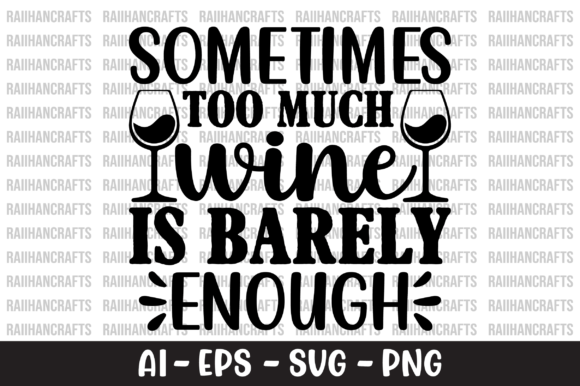
I’ve come across plenty of sassy sayings in my years as an embroidery designer, but few make me smile quite like Sometimes Too Much Wine is Barely Enough. It’s the kind of playful, self-aware humor that turns a simple thread into a conversation starter. My first thought wasn’t just “that’s funny,” but rather, “would this hold up stitched on a linen towel, or would the letters turn into a jumbled mess?” That’s the lens I always use when evaluating a new design for real projects, and I approached this one with a mix of curiosity and practical skepticism.
The Mood: Witty, Warm, and Unapologetically Honest
There’s a certain personality that this phrase carries. It’s not trying to be elegant wine-room poetry; it’s closer to what an actual friend would mutter after a long week. That down‑to‑earth tone immediately shapes how I view its potential. When I picture this design on a finished product, I see it fitting right into casual gifts, kitchen decor, and boutique apparel rather than formal or overly polished items. The lettering style isn’t described in detail, but typically such typographical humor leans on approachable fonts—maybe a relaxed script, a clean serif, or even a hand‑brushed look. In embroidery, that means the personality has to survive the translation from screen to thread without losing its charm.
The Towel Test: How It Stitches in Real Life
To give this review honest grounding, I imagined a real scenario: a small‑shop owner preparing a batch of tea towels for a local wine and cheese festival. They want something quick, recognizable, and guaranteed to get a chuckle. The plan is to stitch Sometimes Too Much Wine is Barely Enough across the lower half of a flour‑sack cotton towel in deep burgundy thread.
Right away, several practical design questions pop up. The phrase itself is fairly long—nine words—so sizing becomes critical. For a towel, you’d likely want the text to span at least six to eight inches wide to keep every letter distinct. Shrink it down to a 4x4 hoop, and thin strokes could close up or turn into a hard‑to‑read blob. That’s where stitch density and satin‑stitch letter width come into play. In my test mental run, the words would need a solid underlay to prevent the terry cloth texture from eating the stitches. A medium‑weight cut‑away stabilizer would be non‑negotiable, with extra care around the loops of the ‘y’ and ‘g.’
Fabric and Size: The Usual Embroidery Tensions
This isn’t a design you can just drop onto any surface and expect flawless results. I’d use it with caution on high‑stretch fabrics like thin jersey t‑shirts unless you’re prepared to hoop with heavy‑duty mesh stabilizer and maybe some spray adhesive. The constant tug of satin columns on knit can cause puckering, especially with a long text like this. On tote bags, aprons, and sturdy canvas, it’s a different story—the flat, stable weave welcomes clean letter shapes and shows off thread sheen beautifully.
Dark fabrics present another common hiccup. If you’re working on a navy or black sweatshirt, thread color contrast must be high. A pale pink or white thread might look charming on a soft blush linen but can vanish on charcoal. I always recommend testing a small section of lettering, like the word “Barely,” on a scrap of your actual fabric. That simple step can save you from ripping out a half‑finished design that nobody can read from three feet away.
Where This Design Shines in a Real Product Line
When I picture businesses using Sometimes Too Much Wine is Barely Enough, I immediately think of curated gift collections. A wine‑themed gift basket with an embroidered napkin, a hand‑stitched wine bag, or even a set of kitchen towels tied with twine—all carrying this one phrase—creates a memorable, cohesive feel. For Etsy sellers and craft fair vendors, the humor factor is a major selling point. People gravitate toward items that spark a reaction, and this design delivers that without requiring complex artwork.
It also works well on items that live inside the home: throw pillows for the couch, a casual apron for a cooking enthusiast, or a simple zipper pouch for wine accessories. Because there are no highly detailed background elements or tiny graphic accents (the title suggests text‑focused design), the embroidery digitizing can be kept relatively clean with either a fully satin‑stitch treatment or a combination of satin for the main letters and a light running stitch for any flourishes. That keeps production time manageable, which is a big plus for craft business owners aiming to keep costs down while maintaining quality.
When to Hold Back: Tips for Careful Use
Even a solid design needs considered application. Here are the main cautions I’d share with anyone planning to stitch Sometimes Too Much Wine is Barely Enough on customer‑facing products:
- Tiny hoop sizes: If your machine maxes out at a 4x4 hoop, measure the phrase length carefully after scaling. Letters smaller than about a quarter‑inch in satin stitch height tend to lose legibility, and the downstrokes of letters like ‘i’ and ‘l’ can become weak spots.
- Highly textured fabrics: Terry cloth, thick waffle weaves, and fuzzy blankets are gorgeous backdrops but require a topping stabilizer to prevent stitches from sinking. Without that, the letter edges blur, and the design loses its crispness.
- Curved surfaces: Caps and structured hats are tough. The long, flat line of text doesn’t naturally wrap around a curved bill without looking distorted. If you must put it on a hat, consider breaking the phrase into two shorter lines and testing the placement thoroughly.
- Frequent washing: On items that will be laundered regularly, like mugs (as a graphic), the embroidery version on towels or shirts needs secure tie‑offs and strong underlay. I’d also recommend polyester thread over rayon for better colorfastness and less fraying over time.
Customer Reaction and Perceived Value
I’ve learned that buyers respond well to humor that feels personal. Sometimes Too Much Wine is Barely Enough isn’t just a generic wine pun; it has a touch of self‑deprecation and real‑life sarcasm that makes it feel like an inside joke. When that joke is rendered in tidy embroidery, it automatically raises the perceived quality of whatever it’s stitched onto. A plain tea towel might sell for eight dollars; the same towel with this saying neatly embroidered in a rich, tone‑on‑tone palette can easily command three times that at a boutique.
From a branding perspective, including this design in your handcrafted lineup signals that your shop understands casual, modern sensibility. It pairs nicely with botanical motifs, simple line‑art wine glasses, or even a minimalist grape cluster, which you could add as a separate design file or combine in your embroidery software. The key is not to overcomplicate it; let the words do the talking.
Practical Embroidery Notes Before You Stitch
Since the product description lists this as a Graphic in the T‑Shirt Designs category, it’s essential to highlight a few technical checkpoints. You likely aren’t purchasing a ready‑to‑stitch embroidery file like a .pes or .dst. Instead, you’re getting a digital graphic intended for multiple uses. Many crafters adapt such graphics for sublimation, screen printing, or vinyl heat transfer, but if you want to embroider it, you’ll need to create or obtain a digitized embroidery file. That’s an extra step, but also an opportunity to customize stitch types, density, and sizing perfectly for your project.
I strongly suggest testing your converted or digitized design on a similar fabric swatch before starting any finished item. Check the thread color contrast under real lighting—sometimes what looks crisp on a monitor becomes muddy once those tiny thread rows fill in. Review the stitch direction in narrow letters; if the ‘m’ and ‘w’ angles feel off, a digitizer can adjust the pull compensation or switch to a skinnier satin column. Even a quick black‑and‑white printout can help you gauge overall balance and readability before the first needle drop.
Hooping is another make‑or‑break moment. For this text‑driven design, I’d use a magnetic hoop or a tightly screwed frame to avoid any shifting during the run. A single misalignment can turn “Barely” into an off‑kilter disaster, and with a witty phrase, the joke vanishes if people can’t read it smoothly.
Commercial Use and Digital File Licensing
The product description mentions this design is for Friend Who Supports Your Special Day and Any Occasions, which hints at personal gifting, but the exact license isn’t spelled out. Before you invest in materials and listing photos, double‑check whether you’re allowed to sell finished physical items made with this design. Many graphic designers permit commercial use within a small‑batch handmade context, but not all do. If the ZIP file doesn’t include a license file, it’s worth asking the creator directly. You don’t want to build a whole Etsy listing around it only to face a takedown later.
Also, if you plan to create digital embroidery files based on this graphic for resale, that’s a different licensing tier and typically requires explicit permission. Even as a craft professional, I always keep a folder of license confirmations handy for peace of mind. It protects your shop’s reputation and shows respect for fellow creators.
Final Stitch Assessment: A Design Worth the Extra Setup
If you’re willing to put in the digitizing work—or you have a trusted digitizer who can transform the Sometimes Too Much Wine is Barely Enough graphic into a polished embroidery file—this design has genuine staying power. Its humor fits right into the maker‑centric world of personalized gifts, and the simplicity of the text means you can dress it up or down by changing thread color and fabric choice. I can already see it as part of a coordinated line: matching kitchen towel, apron, and wine bag sets, all carrying that same cheeky motto in slightly different scales.
The only real limitation is the buyer’s own embroidery knowledge. Beginners who expect a drag‑and‑drop machine‑ready file might be disappointed if they skip the conversion step. But for intermediate and advanced stitchers, this graphic opens up a creative rabbit hole. It can be used for sublimation on mugs, printed on T‑shirts, cut from heat‑transfer vinyl, or yes, digitized and embroidered onto just about anything stable enough to hold a hoop. The mood, the versatility, and the instant customer connection are all there—you just need to approach it with a bit of craft know‑how and patience.